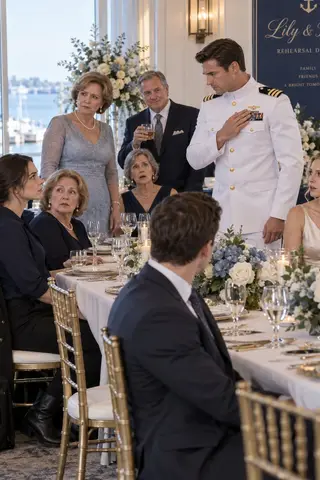
 My Mother Banished Me to the Reject Table
Chapter 22
The Master Class
With the final legal debris of Alan’s schemes cleared away, my attention turned toward the future generation of naval leadership. In early winter, the Superintendent of the United States Naval Academy in Annapolis extended an invitation for me to deliver the keynote address and conduct a leadership seminar for the senior midshipmen preparing for aviation commissions.
Walking through the hallowed stone arches of Bancroft Hall felt like stepping into an echo of my younger self. Over twenty years ago, I had clawed through officer candidate training with blistered hands, unyielding discipline, and no wealthy patrons to smooth the road before me.
The auditorium in Mahan Hall was packed to capacity with over six hundred men and women in pristine dress blue uniforms. When I stepped onto the stage, the sudden silence was absolute.
"Many of you will leave this yard in five months believing that command is about authority, power, and prestige," I began, my voice carrying cleanly across the mahogany balconies without theatrical flair. "You will be assigned young sailors whose lives depend not on the cleverness of your speeches, but on the integrity of your daily choices."
I looked out over the rows of eager, disciplined faces.
"Early in my career, I was told that staying quiet and accommodating small minds was the price of acceptance. I was told that competence without self-promotion was invisible. That was a lie. True authority doesn't need to shout, and it never demands an unearned pedestal. When you sit in the cockpit of a fighter jet or stand on the bridge of a destroyer in thirty-foot seas, the ocean does not care who your family knows or what country clubs you belong to. It only respects your competence, your character, and your willingness to protect the people entrusted to your care."
The lecture concluded with a standing ovation from the midshipmen that shook the high stained-glass windows. During the reception afterward, dozens of young women lined up to ask questions about tactical decision-making and operational resilience. Among them was a young midshipman first class who stepped forward with a notebook clutched to her chest, her eyes wide with reverence.
"Admiral Hayes," she said, her voice shaking slightly with genuine awe. "My father was an aviation machinist mate who served under your command during the Mediterranean deployment on the Ford. He wrote home to say you were the first flag officer who ever came down to the hangar bays at midnight to thank the deck crews for engine swaps during storm operations. He told me to remember that real leaders serve the people underneath them."
A quiet pride warmed my chest. "Your father was right, Midshipman. Take care of your crew, and they will ensure your wings never falter."
The End









