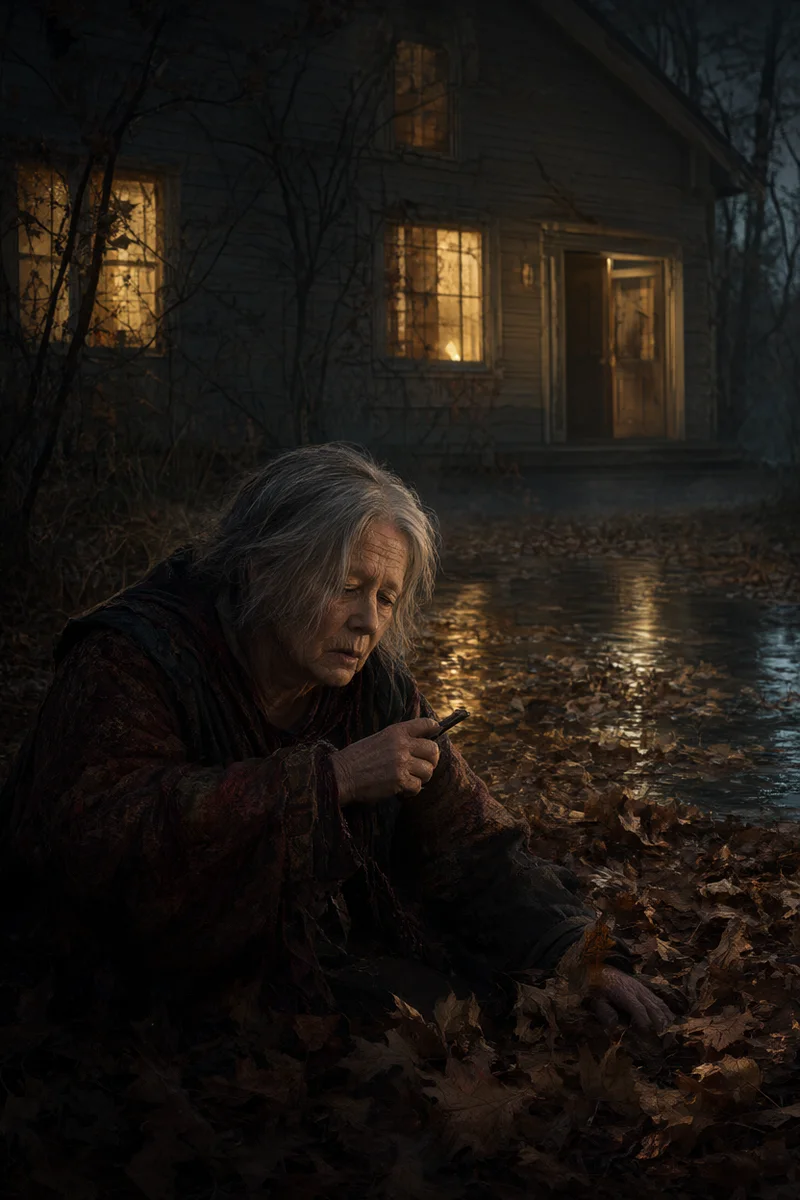
 Kicked out of my own home with a trash bag by my mother, until a dead grandmother's secret trust turned the tables on the ultimate family betrayal
Chapter 2
The Shadows of the Good Light Room
To understand why my mother felt justified in handing me a trash bag on a holiday, you have to understand the ecosystem of the Connelly family. Mom was the sun, Dean was the prized satellite orbiting her approval, Dad was the silent atmosphere holding it all together, and I was the gravitational pull that kept the whole erratic machine from flying apart.
Nana Rose was the one who kept me from drifting into total obscurity. Born in 1941 in a small Tennessee river town, Nana had spent more than thirty years working in a sun-drenched side room of this very house—a space she called the "good light room" because of the way the morning sun poured through the east-facing windows, illuminating dust motes like floating gold. Her second husband, Chester, had built her heavy wooden quilting frame by hand out of seasoned cherry wood. Chester was a retired furniture maker who believed anything worth keeping should be built carefully enough to repair rather than replace. When Chester died of a massive heart attack when I was eleven, Nana kept his work apron hanging faithfully beside that frame until the day she died.
When I was nine years old, Mom decided that my academic performance needed "structural realignment," which was her polite term for finding somewhere else to dump me on Saturdays so she could attend bridge club and social teas. While Dean was sent to elite summer enrichment camps and weekend robotics leagues, I was dropped off at Nana’s front door with a brown paper bag lunch. At nine, I felt the sting of rejection, believing Dean mattered more because he received the investments. By thirty-three, I realized I had won the lottery.
Those Saturdays in the good light room were my real education. Nana taught me how to cut fabric squares with absolute precision, measure seams down to the millimeter, thread needles without fraying the cotton, and pull stitches tight without puckering the cloth. Whenever I grew impatient, rushing to finish so I could go play outside, she would stop my hands with her warm, calloused fingers. "Patience isn't a personality trait, Audrey," she used to say, her eyes twinkling behind wire-rimmed glasses. "It’s a skill. You have to practice it until it costs you something."
The real crisis hit during the summer between my sophomore and junior years of high school. Mom’s ambitious home-staging business collapsed overnight under a mountain of debt. She had launched it with money she grandly claimed came from a mysterious family inheritance settlement. Years later, I discovered the truth: a portion of it had actually come from a secret second mortgage on a property she had hidden from Dad, dragging their finances to the brink of foreclosure. When the company went under, my parents packed up their lives and moved into Nana’s house under the banner of a "temporary stay."
Temporary, in my mother’s dictionary, meant permanent squatting. That was seventeen years before the Thanksgiving she threw me out. They never left. I managed to escape for four years in my twenties, carving out a modest life two towns over working as an assistant manager at a regional logistics firm. But when Nana’s health began its slow, inevitable decline, I dropped everything and came back. I drove her to oncology appointments, sat through sterile specialist visits, organized her complex medication schedules, and learned the quiet, unglamorous routines that made her hard days bearable.
Mom showed up for holidays, Mother's Day brunch, and milestone birthdays. She would pose for photographs holding Nana’s hand, post glowing tributes about being a dedicated caregiver on social media, and vanish the moment the dishes were done. When Nana died at eighty, passing away peacefully in the good light room with the east window open to the neighbors' wind chimes, Mom wore stark white to the funeral. That morning, I stood in the receiving line and listened in stunned silence as she told three different mourners that she had been Nana’s primary daily caregiver for the last five years.
I said nothing. I swallowed the rage, assuming Nana’s house would naturally revert to Mom anyway. After all, Mom was her only surviving child, and my parents had lived under that roof for nearly two decades. I thought I knew how the world worked. I was entirely wrong.
The End









