 Husband Demanded Control of My Assets While I Was in Hospital Bed
Chapter 4
Exhibit A — The Foundation of Separate Property
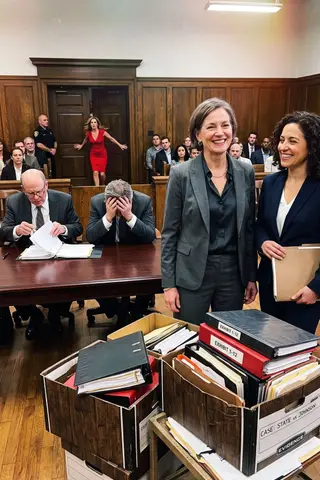
The courtroom held its breath as Evelyn Vance unzipped the heavy canvas binder resting atop the first open litigation box. The silence in Room 4B was absolute, broken only by the hum of the overhead air conditioning vents.
"Exhibit A, Your Honor," Evelyn announced, sliding four sets of meticulously tabbed, certified documents toward the bailiff for distribution to the bench and opposing counsel. "The original articles of incorporation, charter, and operating agreement of Mercer Industrial Group, dated October 1998."
Howard Finch grabbed the top document, his eyes scanning the dense legal text while Richard leaned over his shoulder, squinting anxiously.
"As the court can clearly verify on page three," Evelyn continued, her voice maintaining a steady, rhythmic cadence, "the initial capital injection of three hundred and fifty thousand dollars—the funds used to secure the initial office lease, purchase the first heavy machinery units, and hire the founding staff—did not originate from marital earnings, nor from any labor performed by Mr. Mercer."
Richard’s breathing hitched. His eyes widened as he recalled the distant past of 1998, a time when he was a junior sales rep with big dreams and zero capital.
"Those funds," Evelyn stated, her eyes locking onto the bench, "consisted entirely of a personal inheritance disbursed to Caroline Mercer from the estate of her late father, Arthur Holloway. Under North Carolina General Statutes Section 52-7, separate inherited property maintained in a segregated, non-commingled LLC account does not transmute into marital property, regardless of the duration of the marriage. Mr. Mercer was hired by the LLC as an operational manager in its first year. He was an employee—an essential one, historically, but legally an employee nonetheless."
Finch rapidly flipped through the financial schedules attached to Exhibit A, his face draining of color as he whispered frantically to his client. "Richard... the Holloway estate? Is this true? Did her father fund the startup capital?"
Richard shook his head violently, his voice trembling as he muttered, "That was twenty-six years ago! Everyone forgot about that account! It was supposed to be absorbed into our general holdings!"
"Corporate structures do not simply forget legally binding instruments, Mr. Mercer," Evelyn replied smoothly across the aisle, overhearing his panicked whisper. "Especially when they are backed by ironclad irrevocable covenants."
Judge Callahan adjusted her spectacles, her eyes scanning the certified banking stamps and signatures on the 1998 charter. She looked up from the document, fixing a severe gaze upon Richard's table.
"Mr. Finch," Judge Callahan inquired dryly, "did you fail to review the initial capitalization history of your client's own company before filing an emergency conservatorship over assets he apparently does not legally own?"
Finch swallowed hard, adjusting his tie with a sweaty finger. "Your Honor, we... we maintain that subsequent capital reinvestments and marital sweat equity over two decades transformed the operational scope—"
"Statutory transmutation requires specific legal filings, Mr. Finch," Judge Callahan interrupted sharply. "None of which appear anywhere in this exhibit. Proceed, Ms. Vance."
Evelyn offered a polite nod to the judge before reaching back down into the open litigation box. She pulled out a heavy, leather-bound portfolio containing architectural blueprints, property deeds, and tax assessor stamps. The real battle was just beginning, and the foundation upon which Richard had built his entire adult identity was about to crumble into dust.
The End









