 Her Name Alone
Chapter 5
The Welfare Check
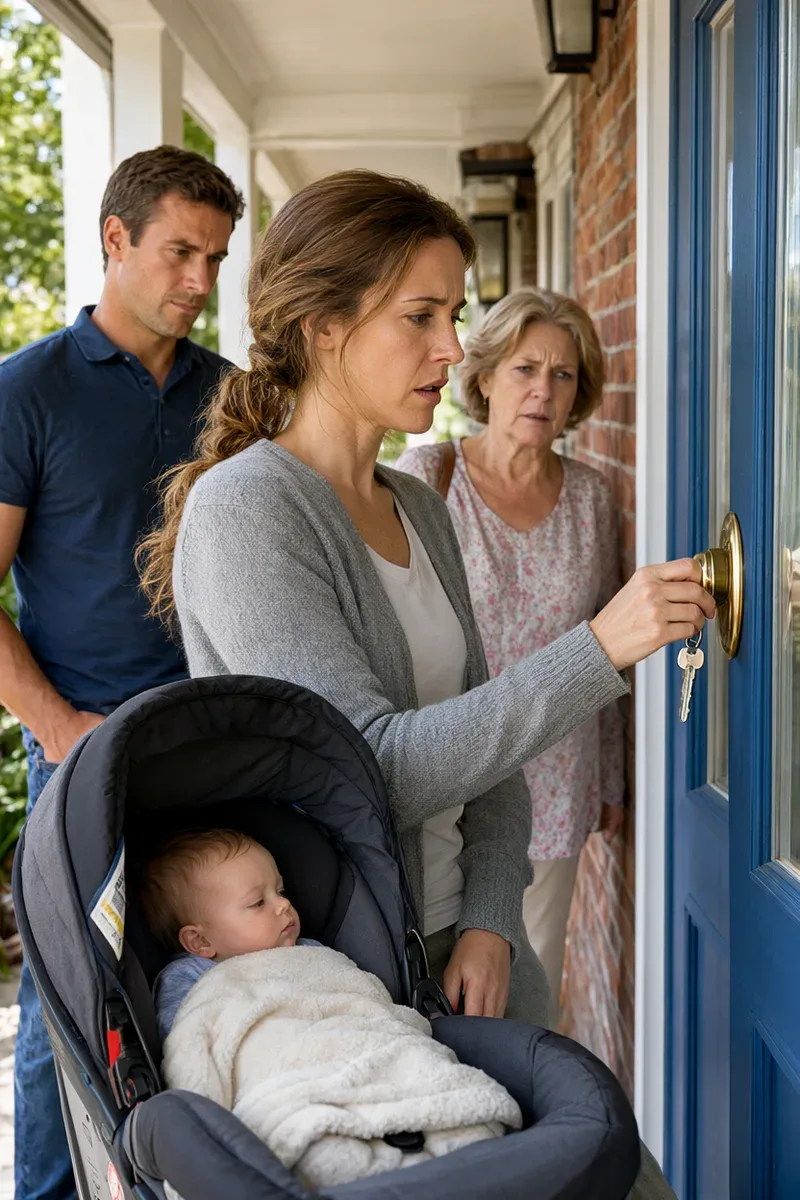
It was not Officer Achterberg this time. It was a sergeant named Oakes, in his fifties, and a woman from the county family services office who introduced herself as Imelda Thorsby and showed me her badge on a lanyard before I asked.
"We received a call," Thorsby said, "expressing concern for your safety and the baby's. I'm sorry to come to your door like this. Can we come in for a few minutes?"
I knew what not letting them in would look like. I opened the door wide.
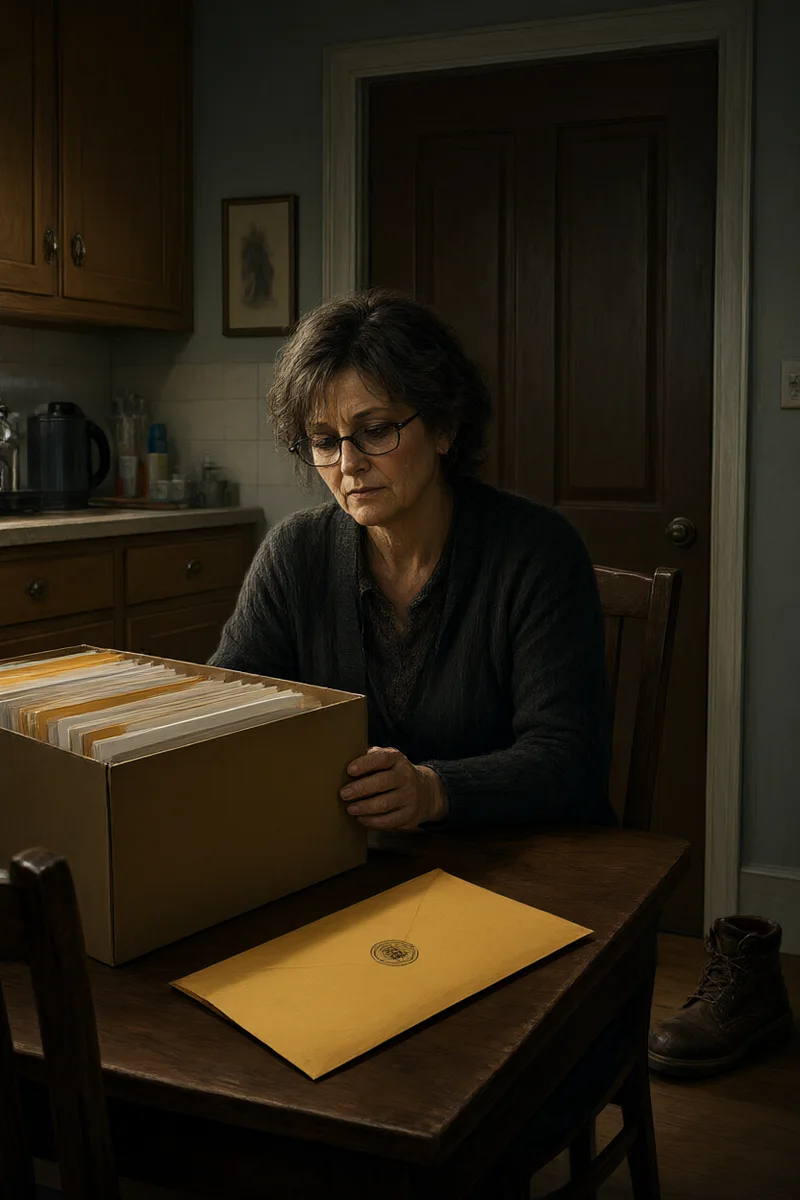
I had been afraid of this exact visit since 9:14 that morning, so I had done the only thing I know how to do with fear, which is organize it. On the kitchen table, in a manila folder, I had my discharge papers from St. Odran's, the depression screening I had filled out with the night nurse, the photo of the green marker on the whiteboard, my OB's name and the date of my one-week follow-up, and the pediatrician appointment on Thursday. Tobiah's feeding log was on the fridge, in my handwriting, every feed and every diaper since we came home.
Thorsby read all of it. She did not hurry.
"You've had a tough start," she said finally. "Your text messages were mentioned in the call. I can't tell you by whom. The caller said you'd told your husband you couldn't do this."
"At 3:20 in the morning, with a baby who wouldn't latch. Twenty-one minutes later I told him he was eating." I turned my phone around so she could see both. "I'd been awake since Monday."
Thorsby read the texts and nodded slowly. Then she asked me the questions, the real ones, without softening them: was I sleeping, did I ever have thoughts of hurting myself or the baby, who was helping me. I answered each one the way I had answered the nurse, honestly, because the questions deserved honesty even if the call did not. I told her I cried most days around five. I told her my neighbor was a retired L&D nurse who had been in my kitchen twice. I told her my husband was staying at his mother's.
"By choice?" Thorsby asked.
"His."
Sergeant Oakes, who had been looking at the fridge log, said, "My wife did one of these for our first. Same columns."
Thorsby closed her folder. "I'm going to note that the home is safe, the baby is well cared for, and you have support and a follow-up plan. If you ever do feel the crying getting heavier instead of lighter, I want you to call that line on your whiteboard. That's not a judgment. It's just the right thing to do."
"I know," I said. "I will."
At the door she hesitated, and for the first time she looked uncomfortable.
"Mrs. Brennagh, has anyone served you with anything yet?"
"Served me?"
"The caller mentioned there was already a court filing. I don't know the contents. I just don't want you to be caught off guard."
They left at 5:40. At 6:05 the doorbell rang again, and a man in a windbreaker asked if I was Calla Brennagh, and when I said yes he handed me a thick envelope and said, "You've been served, have a good night," and was in his car before I could ask him anything.
Petition for Emergency Temporary Custody and Grandparent Rights, it said. Petitioner: Aurelia M. Brennagh.
I turned the pages standing in the hall. Allegations of severe postpartum depression. Refusal of help. Threats to self. Exhibit C was a sworn affidavit supporting the petition, describing my moods, my statements, my unfitness.
It was signed Cillian J. Brennagh.
The End