 He Hid Me For 7 Years While Dating His Rich Boss Lady
Chapter 29
The Ribbon Across the River
One year after the groundbreaking ceremony, the Sterling Riverfront Performing Arts Pavilion was officially completed.
The opening night was heralded as the cultural event of the decade in Chicago. The city had closed two blocks of Wacker Drive to accommodate the thousands of citizens, students, and music patrons gathered along the riverwalk. The pavilion looked breathtaking under the twilight sky—its soaring curved timber canopy glowing like a warm lantern over the water, the open-truss limestone colonnade welcoming the public without a single gate or barrier.
Inside the grand green room, Jenna was adjusting the diamond necklace Julian had sent to the studio earlier that afternoon. I wore an architectural gown of structured emerald-green crepe that framed my shoulders with regal simplicity.
“Are you ready to see history being made?” Jenna asked, her reflection grinning beside mine in the full-length vanity mirror.
“I’m ready,” I answered, taking a deep, centered breath.
When Julian entered the green room, dressed in an immaculate bespoke tuxedo, his breath visibly hitched. He walked over to me, took both of my hands, and pressed a kiss to my knuckles.
“You look like the queen of this city,” Julian whispered.
“I don't want to be a queen, Julian,” I smiled softly. “I just want to be an architect who kept her word.”
The concert began with Aaron Copland’s Fanfare for the Common Man, performed by the Chicago Symphony Orchestra. As the first explosive notes of brass and percussion echoed through the hall, a collective gasp swept through the two-thousand-seat auditorium. The acoustic response was miraculous. The sound was rich, immediate, and utterly enveloping, carrying across the open river promenade where ten thousand citizens listened in reverent silence under the evening stars.
When the final movement concluded, the audience rose as one. The standing ovation lasted for twelve continuous minutes.
The mayor of Chicago stepped to the stage microphone, raising his hands for quiet.
“Ladies and gentlemen,” the mayor announced, his voice echoing across the water. “Many people build structures in this town to make themselves look tall. But tonight, we dedicate a pavilion built by a woman who built a monument for all of us. Please join me in honoring the principal architect of the Sterling Pavilion: Claire Bennett!”
The roar of the crowd was deafening. Spotlights swept across the stage, illuminating me as Julian gently took my hand and led me out toward the center of the podium.
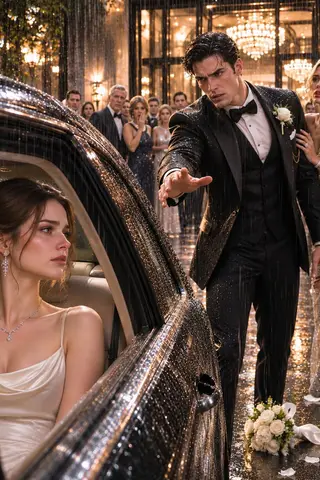
Standing under the warm lights, looking out over the sea of cheering faces, my eyes drifted momentarily toward the dark reflective surface of the Chicago River below. Seven hundred and thirty days ago, I had sat in a dark driveway in the streaming rain, dismissed as a ghost with nowhere to go. Now, the greatest city in the American heartland was chanting my name.
I raised my hand in quiet acknowledgment, feeling an overwhelming, transcendent peace wash through my soul. I was no longer running from the past. I had outbuilt it.
The End









