 He Dumped Her on the Platform Because She Was 'Too Small'
Chapter 1
The Railway Platform Rejection
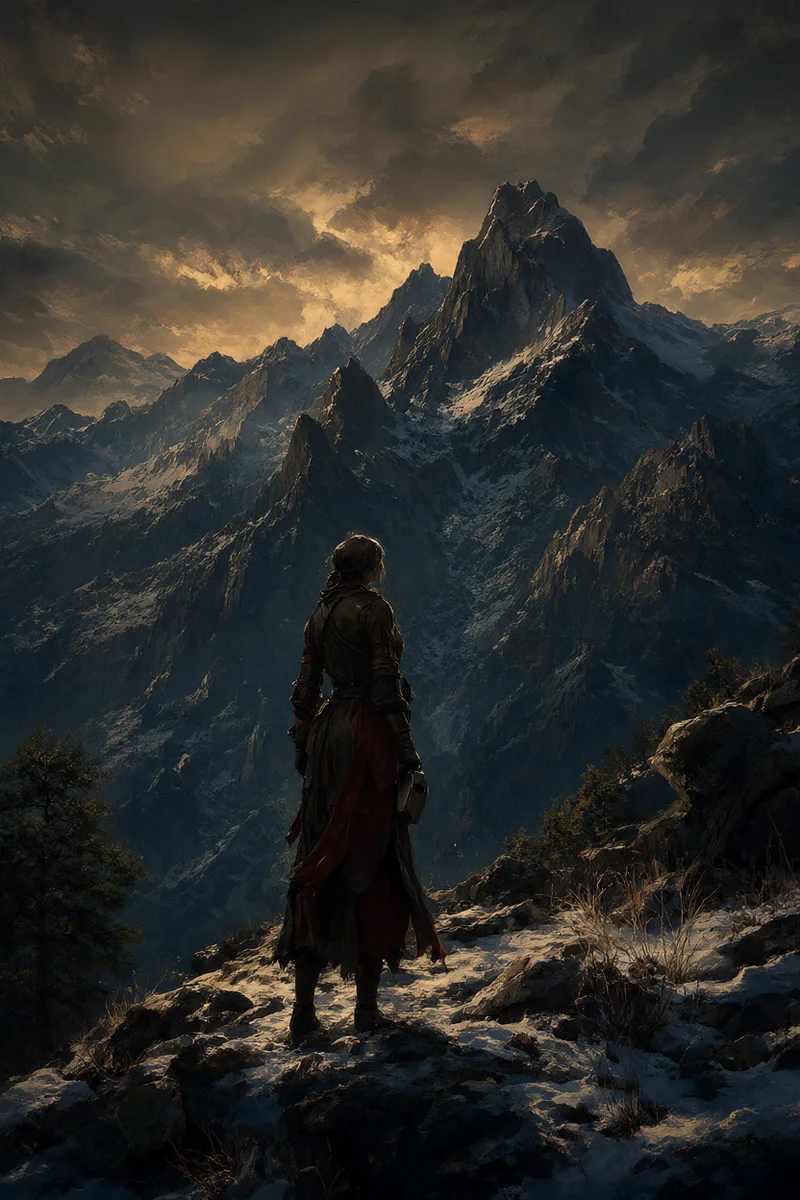
The whistle of the Denver & Rio Grande steam engine faded into a mournful wail against the jagged, snow-dusted spine of the Rocky Mountains, leaving Kora Wade standing alone amidst a blizzard of swirling coal smoke and indifference. Her single leather-bound trunk rested heavily on the wooden planks of the platform, the brass lock glinting under the harsh afternoon sun of Silver Creek, Colorado.
Five days. She had spent five grueling days squeezed onto hard wooden benches, smelling coal gas and cheap tobacco, clutching a packet of letters tied with a faded ribbon. Letters written in the neat, confident hand of Amos Higgins. “Come west, Kora. The cabin is warm, the land is rich, and a decent man needs a proper wife.”
She had packed her entire existence into that single trunk: her mother’s silver thimble, three cotton dresses, a ledger of sewing patterns, and the stubborn hope of a twenty-four-year-old seamstress whose lungs were being slowly poisoned by the suffocating dye and close air of a Chicago tailor’s loft. Her eyesight was failing, her fingers were permanently calloused by steel needles, and the city offered her nothing but a slow, quiet starvation.
Then Amos Higgins appeared from the crowd.
He was not the romantic figure she had conjured from his letters. Amos was thick-shouldered, smelling strongly of woodsmoke and sheep fat, with heavy, flat eyes that swept over her form with the cold, evaluating scrutiny of a butcher appraising a calf at market.
He did not offer a hand to help her down. He did not ask after her journey. Instead, he stepped close, his boots clicking hard against the platform, and reached out to grip her upper arm. His calloused fingers squeezed her bone with bruising familiarity.
“You’re small,” Amos said, his voice flat and gravelly.
Kora blinked, her heart fluttering against her ribs like a trapped sparrow beneath the dusty sunlight. “I assure you, Mr. Higgins, I’m healthy. I’ve worked twelve-hour days in Chicago. I have strong stamina.”
“Healthy ain’t sturdy,” Amos muttered, releasing her arm as if touching something defective. His gaze moved over her narrow waist, her delicate wrists, and the pale, smooth skin of her hands. “My last wife died of fever after the second winter. I need a woman who can haul fifty-pound sacks of flour, chop heavy pine logs for the stove, survive a six-month freeze, and not snap in half when the weather turns nasty.”
Two dock workers unloading crates of canned goods nearby slowed their pace, watching with frank, unpleasant curiosity.
Heat climbed Kora’s neck, burning into her cheeks. She felt small—not just in stature, but in the crushing weight of her own vulnerability. She had burned her bridges in Chicago. She had told her landlord she was leaving forever. She had spent her last savings on the train ticket.
“Mr. Higgins,” Kora began, her voice tightening with a mix of humiliation and rising defiance. “Your letters never mentioned logging requirements. You spoke of companionship, of running a home—"
Amos pulled a silver pocket watch from his vest, flipped it open, clicked it shut, and shoved it back into his pocket with finality.
“The arrangement is void,” he interrupted, turning his back on her as he adjusted his wide-brimmed felt hat. “I can’t afford to feed a delicate city flower who’ll freeze to death before January. Find your own way back, or look for a laundry job in town. Good day, Miss Wade.”
And with that, he walked away, his heavy boots crunching steadily down the gravel road toward the mercantile, abandoning her to the wind.
Kora stood motionless beside her trunk. A few lonely coins jingled in her purse—barely enough for a stale loaf of bread and a cot in a boarding house for a single night. Around her, the mountain town of Silver Creek rose like a natural fortress of dark timber and slate, indifferent to her plight. The railway platform was clearing out. The stationmaster was locking the ticket window.
She refused to cry. Hot tears would not buy a room, nor would they feed her stomach. Despair was a luxury she could not afford.
While Amos dissolved into the distance, Kora knelt beside her trunk and opened her purse, her fingers calculating with cold mathematical precision how many nights her remaining three dollars and forty cents might purchase at the local inn.
“He’s a fool.”
The low, rumbling voice came from directly behind her, so close it sent a shiver straight down her spine.
Kora straightened abruptly, spinning around with her chin raised. A massive man was leaning against a wooden pillar of the station awning. He wore a weathered canvas coat stiffened with age and weather-proofing wax. Deep lines crinkled the corners of pale green eyes that were remarkably calm, framed by a thick, dark beard threaded heavily with silver. He looked like he had been hewn out of the very granite cliffs towering above the town.
“I don’t require your pity,” Kora snapped, her nerves frayed to the snapping point.
The stranger didn’t blink. “Ain’t offering it. Pity’s for cripples and dogs.”
He pushed off the pillar, his massive frame dwarfing her trunk. His name, she would soon learn, was Griffin. He lived ten miles up the mountain, past the timberline where the spruce trees grew twisted and dense. His wife had died fourteen months ago, leaving him alone with six-year-old twins.
“They’re turning wild,” Griffin admitted, his voice rough, carrying the weight of a desperate father. “Barely talk to me. Don’t trust anybody. They won't learn their letters, and they eat like wolves in a harsh winter.”
Kora stared at him, suspicion warring with sheer desperation. “What exactly are you asking of me?”
“Work,” Griffin said bluntly. “Ten dollars a month. Room and board. Your own bed in the loft. No marriage. No false promises.”
Kora looked down the empty road where Amos had vanished. Then she looked back at the mountain man. “Why me?”
Griffin reached down, his large, scarred hand tapping the brass lock of her trunk.
“Higgins looked at your bones,” Griffin said quietly, his pale green eyes locking onto hers. “I looked at your spine.”
Kora became completely still.
“When that bastard humiliated you in front of the whole town, you didn’t cry. You didn’t beg. You didn’t collapse,” Griffin said, his voice dropping an octave, rich with respect. “Your shoulders went back, your chin went up, and your brain started figuring out how to survive.”
He turned and took two slow strides toward the livery stable where a sturdy buckboard wagon waited, hitched to a pair of patient bay horses.
“My twins don’t need a draft horse to haul flour,” Griffin called back over his shoulder. “They need someone who doesn’t fall apart when the wind blows.”
He stopped and looked at her. “You have five minutes to decide.”
Kora looked at the departing train hissing steam on the side track, the hostile storefronts of Silver Creek, and the battered trunk containing her entire past. Then she reached down, gripped the cold iron handle of her luggage, and followed him into the mountains.
The End









