 Half-Life of Forever
Chapter 5
Behind the Chart Drawer
We sat on the porch steps under the new light. He sat one step below me, which I noticed, and which I think he meant.
"In September you told me you didn't want to know who bought it," he said. "You said it twice. So when Del said he wanted a boat for the reservoir, I gave him your number and kept my mouth shut. Thanksgiving I drove over and helped him pull the old console. The wiring was a mess. I bought him a bilge pump."
"And Thursday?"
"Thursday I saw Bitterbrush on that envelope and thought, Del did something stupid. Or his kid did. Some sick prank with junk he found on the boat." He rubbed his face. "I called him Friday morning. Straight to voicemail. He goes elk hunting the second week of December, up where there's no signal. I wanted to know before I accused my own family to you. I was wrong."
"I searched your truck."
"Yeah." He almost smiled. "Did you at least find my good sunglasses? I've been looking for a month."
I didn't laugh. I wanted to. I handed him my phone, and he called his cousin, and this time a man answered on the fourth ring with an engine running behind him.
"Del, it's Wynn. I've got Esme Aldercott here. You're on speaker. Did you mail something off that boat?"
"The letter? Sure." Del had a slow, careful voice, and he sounded puzzled. "After you left I got the chart drawer out of the old console. Had to pry the whole frame loose. There was an envelope wedged down behind it against the hull. Sealed, stamped, addressed. My mother raised me you mail a stamped letter, so I dropped it in the box at the post office on my way to work. December second, I guess." A pause. "I didn't open it, ma'am. Was that wrong?"
"No," I said. "That wasn't wrong. Was there anything else back there?"
"A pencil. Two quarters. A tide table from three years back, all swelled up from the wet."
I thanked him. I think I thanked him. Wynn ended the call and closed my fingers around the phone.
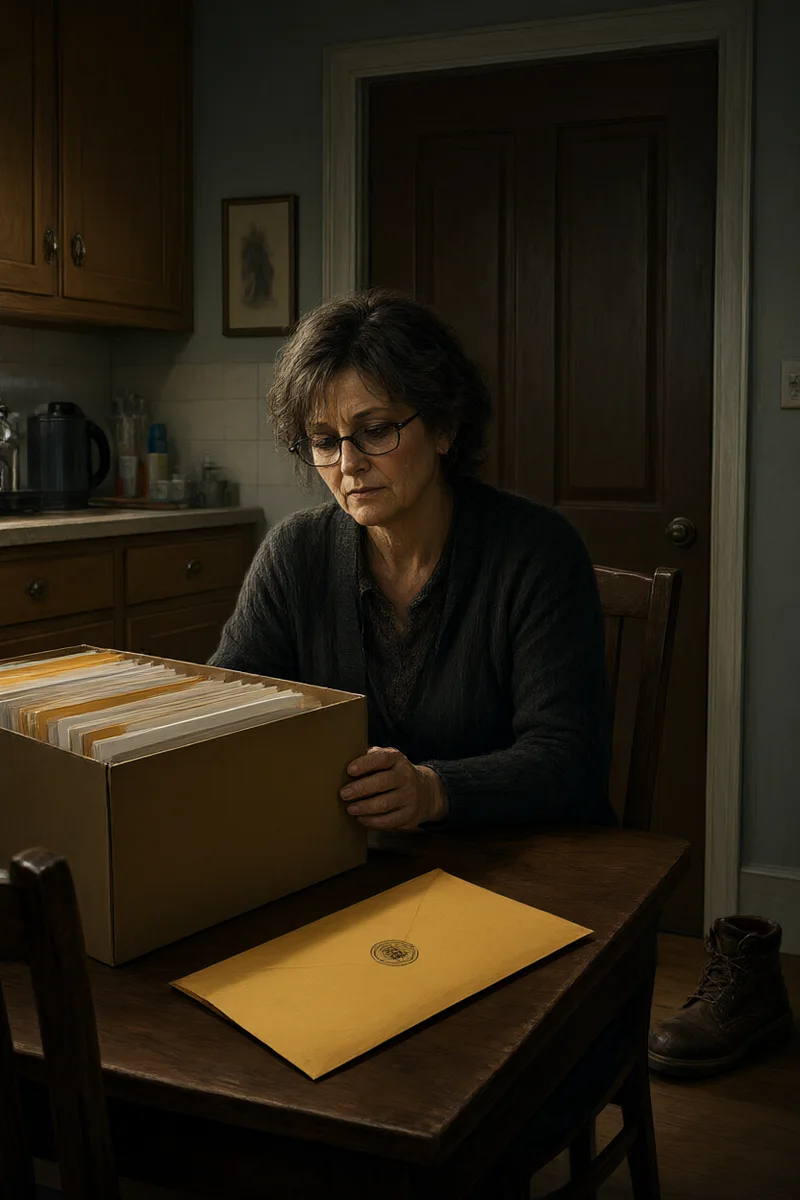
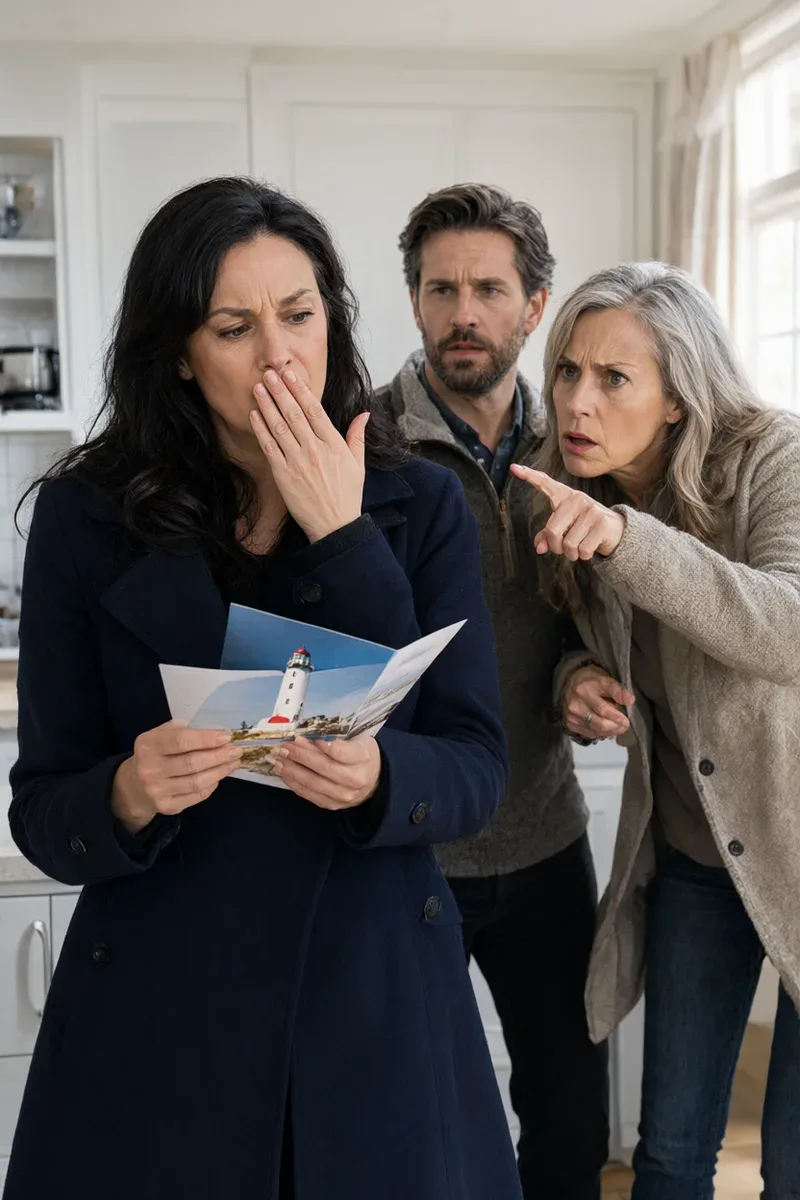
So. Hypothesis three. Zeke had written me a Christmas card at the helm on some slow gray afternoon that December and tucked it in the chart drawer to mail later, and it had slipped down behind the frame. The Coast Guard towed the boat in. Deputies searched it. Nobody pried out the drawer. For three years his card rode in the dark nine inches from the wheel, and then it rode a trailer four hundred miles to a reservoir in Idaho, and a stranger with good manners put it in the mail.
He was dead. He had been dead the whole time. It hurt more than I expected, after three years, as though I'd been allowed four days of hope and then charged for them.
"He wrote that the week he died," I said, "and he thought I'd been hiding money from him."
"Maybe he was wrong."
"He was wrong. I want to know why he thought it."
I would take the card to the county sheriff on Monday, with Del's name and number, and ask what account a dead man could have meant. It seemed like the sensible thing. It seemed like what an innocent person does.
Monday was the fourteenth. Three years to the day.
Halfway through third period, Principal Nesbit himself came down the hall to cover my class, which he had never once done in nine years. At my door he didn't quite meet my eyes.
"There's a detective from the county in the conference room," he said. "And a woman from your insurance company. They'd rather talk to you here than at your house."
The End