 Grandma Short $17 at Supermarket Gets Publicly Humiliated by Her Millionaire Grandson
Chapter 1
The Humiliation at Checkout Lane Seven
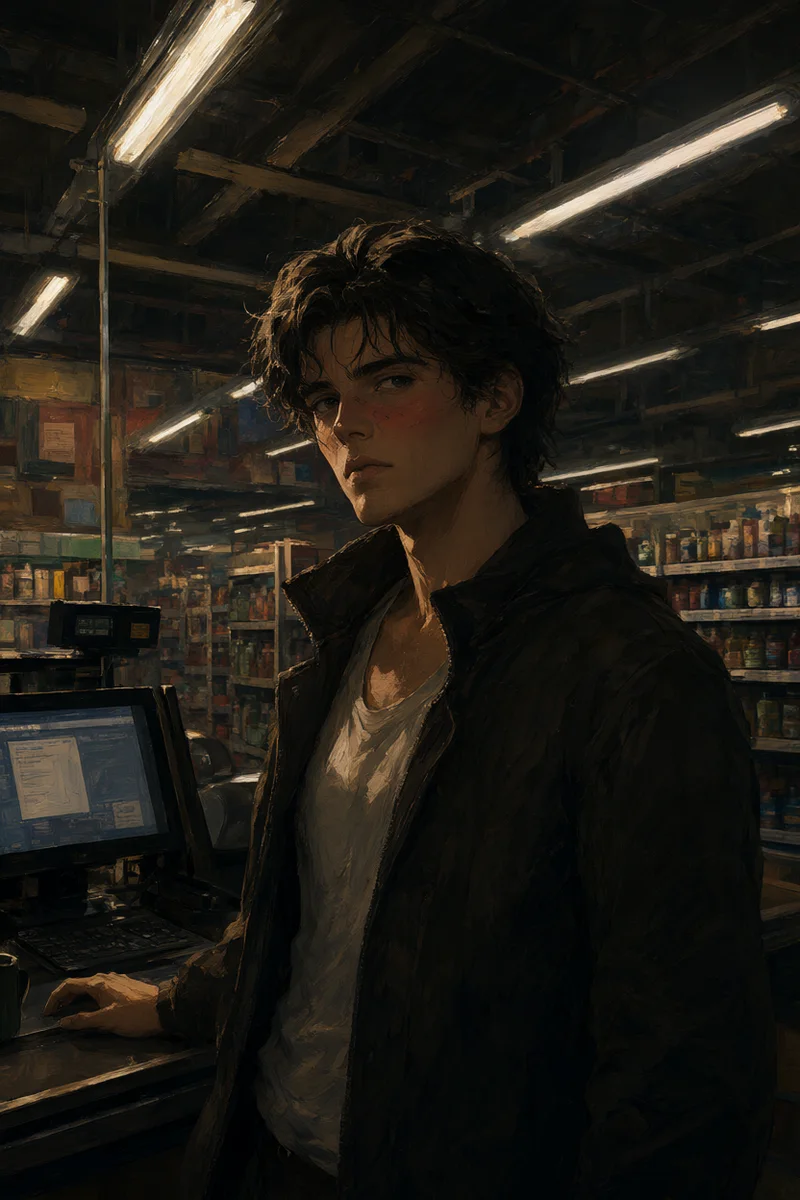
The bright fluorescent lights of the supermarket stung my eyes, but the heat burning my cheeks was far worse. I stood frozen in front of the register in lane seven, one hand buried deep inside the worn leather lining of my purse, searching through pockets I had already checked twice. The other hand gripped the metal shopping cart as though it were the only anchor keeping me from collapsing onto the polished linoleum floor.
The digital register screen glowed a relentless, unforgiving red.
Total: $43.87.
Inside my worn purse, tucked away in a small zippered coin pouch, I had exactly $26.34. That was it. That was my entire budget for the week, stretched to its absolute breaking point, and I was still short by $17.53.
Behind me, a sharp, impatient sigh cut through the air. A baby in a stroller a few carts back started to fuss, crying out with a shrill piercing sound that matched the pounding in my temples. The teenage cashier shifted nervously from foot to foot, her fingers tapping anxiously against the plastic keyboard as she glanced up at the growing line of annoyed shoppers forming behind us.
My heart hammered against my ribs. "I... I need to put a few things back," I whispered, my voice trembling so badly the words barely formed.
Before I could even reach for an item to remove from the cart, a crisp, irritated voice sliced through the space beside me. "Do you have any idea how embarrassing this is, Grandma?"
It was Dean. At thirty-one years old, my grandson was dressed in one of those expensive, high-end polo shirts he loved wearing on weekends. His clothes were immaculate, his luxury watch gleamed under the harsh store lights, and his face was twisted into an ugly, mottled shade of red—not out of concern or pity for me, but with raw, unfiltered mortification.
"Do you see what you’re doing?" he hissed, leaning down so his words struck me like physical blows. "Everyone’s waiting. Half the store is staring right at us."
"Dean, please," I murmured, staring down at my worn-out sneakers.
Then Meadow appeared beside him, materializing like a storm cloud. My daughter-in-law looked into the shopping cart, her eyes sweeping over the contents before locking onto me with a look of pure disdain, as if I had deliberately orchestrated this public humiliation just to ruin their Saturday afternoon.
"You’re holding up an entire checkout line because you can’t afford basic groceries?" Meadow asked, her tone dripping with venom.
I swallowed hard, the lump in my throat feeling like sharp glass. "I miscalculated."
"Well, obviously," she retorted, crossing her arms tightly over her chest.
I reached blindly for the package of fresh chicken breasts sitting near the middle of the cart. We could live without it, I told myself. We could eat rice and beans, or stretch the leftover vegetables from three nights ago. Except Meadow had specifically commanded me that very morning to make fresh chicken soup for dinner because she was expecting some of her neighborhood friends to drop by later in the evening.
So I pulled my hand back from the chicken and reached for the loaf of sliced bread instead.
Except the bread was meant for the children’s school lunches for the upcoming week. If I put it back, the kids wouldn't have sandwiches for Monday morning.
What about the gallon of whole milk? They needed it for breakfast.
Then my eyes fell upon a small white pharmacy bag nestled near the front corner of the cart. My prescription arthritis medication. The pills that kept my hands from locking up in agonizing pain every morning, allowing me to cook, clean, and run their household without complaining.
For several agonizing seconds, I simply stood there, staring down at the items in the cart.
What was I supposed to sacrifice? Food for my grandchildren? Dinner for the family? Or my own physical mobility and health?
That was when Meadow leaned in closer, her voice cutting through the noise of the supermarket with crystal clarity. "If you were actually useful around the house, things would be different."
The teenage cashier’s eyes widened in shock. People in the neighboring checkout lanes turned their heads.
Meadow didn't care who was listening. "If you actually contributed something instead of being another mouth to feed, maybe we wouldn’t be in this humiliating situation every single time we step out in public."
Something inside my chest fractured. A deep, heavy wall that I had built up over years of quiet endurance suddenly shattered into a million sharp pieces.
"She’s right, Grandma," Dean added, his voice dripping with casual cruelty. "You live in our house. You eat our food. We pay for everything. The least you could do is handle one simple grocery trip without making an entire scene."
My vision blurred, hot tears spilling over my eyelashes and tracking down my wrinkled cheeks.
They paid for everything?
For eight long years, since the tragic day my son Michael died, I had cooked every single one of their meals. I washed their clothes, scrubbed their bathrooms, folded their laundry, packed the children’s lunches every school day, and stayed home nursing them whenever they caught a bug. I picked the kids up from school, drove them to soccer practice, and babysat on demand so Dean and Meadow could go out to fancy dinners, attend weekend work retreats, take tropical vacations, or simply enjoy "some much-needed time to themselves."
Every single month, a substantial portion of my meager Social Security check went directly toward household utility bills and shared expenses.
And long before all of that, I had raised Dean. I could still vividly picture him as a colicky, screaming infant who cried until two in the morning while his exhausted father—my late son Michael—paced the floor in despair. I had taken Dean into my arms, pressing his tiny body against my shoulder, and walked endless circles around our old living room until he finally drifted off to sleep.
When Dean married Meadow, I welcomed her into our family with open arms, loving her as if she were my own daughter.
And now, here they stood in the middle of a crowded supermarket, parading my perceived inadequacy to complete strangers, telling everyone that I was a parasite, a burden, and utterly useless.
I lowered my head, defeated. "I’m sorry," I whispered, wiping my cheek with a shaking hand. "I’ll put everything back."
I reached out my trembling fingers to grab the package of chicken once more.
Then, a deep, resonant man's voice spoke from directly behind me in the queue.
"Excuse me."
The entire group froze.
"I believe there’s been a massive misunderstanding here."
Meadow immediately stiffened, spinning around with a defensive glare. "This is a private family matter. Mind your own business."
I wiped my wet cheeks with my sleeve and turned to look at the stranger standing behind us.
He was tall, easily over six feet, with distinguished, neatly combed silver hair and a sophisticated navy cashmere sweater. He carried himself with the quiet, effortless confidence of a man who commanded respect wherever he went without ever needing to raise his voice or announce his wealth.
But there was something else about him.
As my eyes focused on his features through my tears, a strange shiver ran down my spine. There was something intensely familiar about the slope of his jaw, the shape of his eyes.
His gaze shifted slowly from Dean to Meadow, taking in their arrogant expressions and designer clothes. Then, his eyes moved to me.
And he stopped dead in his tracks.
"Viola?"
My breath caught in my throat. My heart stopped beating entirely.
No one had said my name like that—with that exact cadence, that specific warmth—in over four decades.
"Viola Monroe?"
I stared up at him, my mouth slightly open.
Then, my eyes caught a tiny, distinct white scar just above his left eyebrow.
Suddenly, the harsh supermarket lights, the blaring announcements, the impatient shoppers, and Dean and Meadow's sneering faces all vanished into thin air.
For one impossible, breathtaking second, I was twenty-two years old again.
Sitting beside the glassy surface of a quiet lake on a warm summer evening. Laughing in the passenger seat of an old, beat-up Chevrolet. Listening to a young man with bright eyes and wild hair promise me that distance, time, and hardship would never change what we felt for each other.
"Richard?" I breathed out, the name slipping past my lips like a ghost from another lifetime.
A slow, dazzling smile spread across his face, lighting up features that time had only refined. "I knew it was you the moment I saw you."
My knees nearly gave out beneath me.
Richard.
The man I had loved fiercely before Thomas entered my life. The man I had waited for through endless autumns and winters. The man I had eventually been led to believe had completely forgotten about me and moved on with his life.
Somewhere during the forty-five years since I had last laid eyes on him, Richard had apparently built an extraordinary empire—becoming a wildly successful multi-millionaire, as I would soon discover. Yet, standing there in aisle seven with tears cutting tracks through the dust on my face and an almost-empty purse hanging open from my arm, he looked at me not with pity, but with a profound, soul-shaking recognition.
Dean stared back and forth between us, completely bewildered. Meadow folded her arms tighter, her face hardening with suspicion.
Without breaking eye contact with me, Richard calmly reached into his tailored jacket, pulled out a sleek black credit card, and handed it directly to the stunned teenage cashier.
"Let me take care of this transaction," Richard said smoothly.
"You don't have to do that," I stammered, my cheeks flaming red.
"I want to," he replied, his voice gentle yet immovable.
His eyes stayed locked onto mine, warm and steady. "Besides, after all this time, I think we have roughly forty-five years of catching up to do."
The End









