 Fourteen Inches
Chapter 9
The Long Hallway
From Room 9 in the east wing to Room 15 in the west wing of Cobbler's Knoll was two hundred and ten feet, through the dayroom, past the nurses' station and around a corner with a fire door. Lennart measured it afterward because he could not believe it. Eudora had been cleared for fifty.
"Mrs. Merriwether," he said, appearing at her elbow as she crossed the dayroom. "This is too far. I must insist." She told him that in that case he could walk with her.
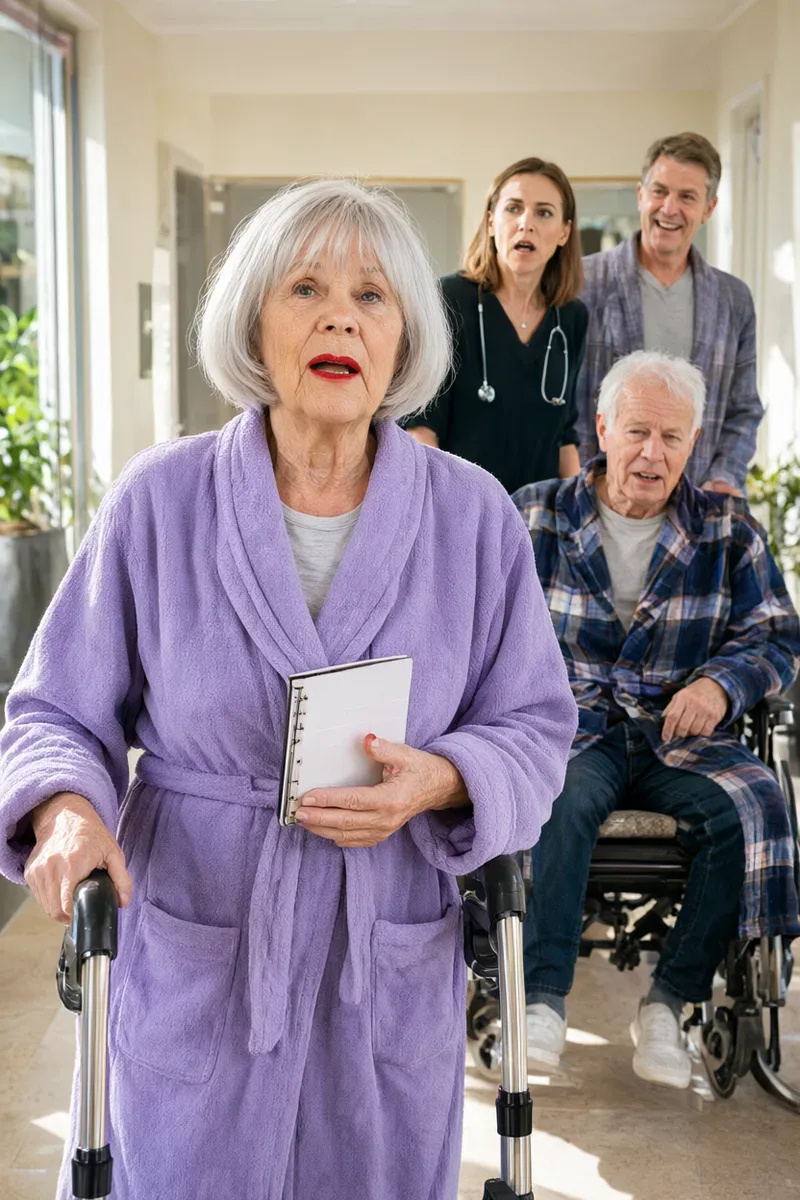
He did. So did Caspian, on her other side, and Dodie behind with a wheelchair just in case. Agnieszka Prochazka said, "Finally," from the bingo table, and three residents and an aide abandoned a game of Uno to follow at a respectful distance.
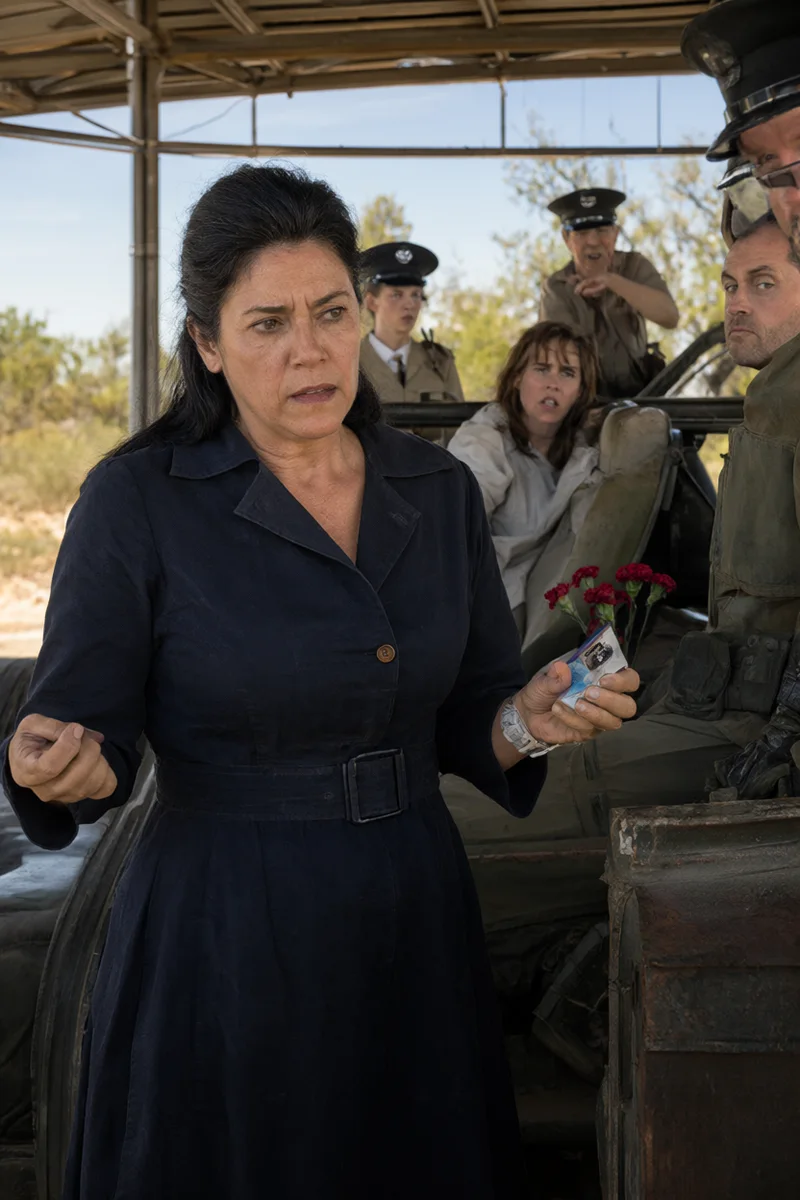
Step, slide. Step, slide. Her new hip burned. She had put on her red lipstick in a hand mirror held by her grandson and had not let him help with the line. At the fire door she had to rest, and a man in a Purdue sweatshirt held it open and said, "Take your time, ma'am, I got nowhere to be till February."
Zeb was sitting by his window in his plaid robe, a puzzle piece in his fingers. He looked up when the procession arrived in his doorway, and saw her, and saw the lipstick, and dropped the piece.
"You walked," he said. "You're only cleared for fifty feet."
She held up the notebook page. His face went very still. "Those kids went in my drawer."
"I sent them." Eudora lowered herself into the chair across from him without bending past ninety degrees, which took a long time and some help from Lennart and was not dignified. "You asked Agnieszka to put you second."
"She told you that?"
"She's ninety-four. She's telling everybody everything." Eudora smoothed the paper on her knee. "And the fence. Fourteen inches."
"The rose had roots on both sides. If I'd set it on the line, I'd have had to cut it." He looked at his hands. "Philo planted that rose. I wasn't going to be the one who killed Philo's rose."
"And my house."
"Leland was going to sell it to the first person who called, and you'd be in Carmel in a place with a fountain in the lobby, and you'd hate it, and you'd be dead in a year out of spite." He met her eyes at last. "So I called first."
The hallway behind them had gone very quiet.
"I have something to tell you too," Eudora said, "since we're clearing out drawers. In 1998, Hortense's sister Velma came into the post office to mail a fruitcake, and she told me Hortense had my recipe card. That I'd given it to her myself, at Mercy, and forgot I had. I knew you never stole it, Zeb. I've known for twenty-eight years."
His mouth opened. Nothing came out of it.
"And I kept on," she said, "because if we were fighting, I could talk to you every day. Over the fence, at the post office, at council. And nobody in Oswinford could say one word about the widow Merriwether and the widower next door, because everybody knew we hated each other." Her voice did not shake at all. "It was the only way I knew how to keep you."
Zeb looked at her, past the walker, past the lipstick, for so long that the man in the Purdue sweatshirt cleared his throat.
"Eudora," he said, "I'm not getting down on one knee. I've got hip precautions."
"Then ask me sitting."
"Eudora Merriwether—"
"Mom?" Leland stood in the doorway behind the crowd, in his quilted vest, holding a manila folder and his car keys. "Griselda called. The buyer wants to know if he can move the closing up."
The End