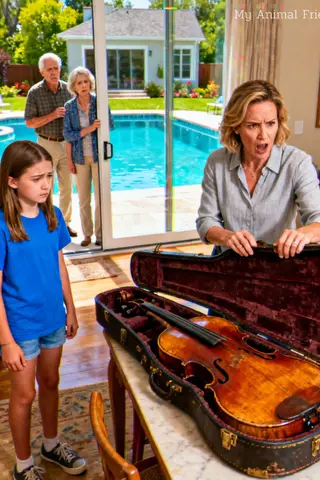
 Family Sells 11-Year-Old Daughter's $87,000 Antique Cello for a Swimming Pool
Chapter 1
The Echo of an Empty Corner
The morning air in my parents' house always carried the scent of wet paint, overpriced coffee, and a suffocating aura of manufactured perfection. That day, however, the atmosphere felt sharper, almost toxic. As I pushed open the front door, the heavy thrum of construction equipment vibrated through the floorboards. Outside, in what used to be a sprawling, peaceful lawn of green grass, heavy machinery had brutally carved out a massive, ugly scar in the earth. A brand-new in-ground swimming pool was underway, funded by a betrayal so casual and cold it made my stomach churn.
I dropped my keys on the entryway table and walked straight toward Grandma Margaret’s old music room. The transition from the chaotic construction outside to the quiet sanctity of that room used to be grounding. But today, the sanctum was violated.
In the corner where my eleven-year-old daughter Lucy’s antique cello had proudly stood for years, there was only a depressing void of dust and emptiness. The wooden floorboards bore a lighter shade where the heavy stand had shielded them from the sunlight for decades.
Lucy stood right there beside the empty space. She was completely still. She wasn't crying, she wasn't screaming, and she wasn't demanding answers. Instead, she carried herself with a heartbreaking, fragile caution—as if she was terrified that asking the wrong question might somehow make this entire nightmare her fault.
My mother drifted into the room, holding a ceramic coffee mug with both hands as if she had merely interrupted a peaceful Sunday morning instead of presiding over a family catastrophe. She offered a thin, practiced smile that didn’t reach her eyes.
"Your father handled it," Mom said smoothly, leaning against the doorframe.
"Handled what?" I asked, my voice dangerously low. "Where is Lucy's cello?"
Dad appeared behind her, wiping his hands on a kitchen towel, looking distinctly annoyed by my intrusion. "We sold it, Emily. It was just sitting there gathering dust. Your grandmother wasn't using it anymore."
"She didn't use it because she gave it to Lucy," I shot back, stepping away from my daughter.
Rachel, my sister, strolled into the room holding a bright green, expensive-looking smoothie, her expression draped in condescension. "Oh, please," Rachel scoffed. "She's eleven years old. What does an eleven-year-old know about a multi-thousand-dollar instrument?"
As if being eleven years old meant your ownership rights evaporated the second an adult decided they wanted cash for their own frivolous desires.
"How much?" I demanded, staring straight at my father.
Dad’s jaw tightened. Rachel looked away, suddenly fascinated by her fingernails.
Mom set her coffee mug down with a sharp clink. "Eighty-seven thousand dollars," she said, almost proudly.
My hand slammed against the doorframe, wood biting into my palm. Eighty-seven thousand dollars. An antique masterwork crafted in the nineteenth century, handed down through generations of musicians, liquidated in a single afternoon behind our backs. And outside, the wet concrete forms of a swimming pool gleamed cruelly in the midday sun.
"You spent Lucy's cello on a pool?" I whispered, horror rising in my throat.
Rachel crossed her arms defensively. "It’s for the family! It’s for the kids!"
"My kid is a kid!" I yelled, finally losing my temper.
Dad rubbed his temples, looking exhausted by my anger rather than remorseful for his actions. "Lucy will be fine with a student cello. Plenty of children rent instruments every single day. You're making a mountain out of a molehill, Emily."
Lucy will be fine.
It was the ultimate family mantra. Whenever Lucy was expected to sacrifice her happiness, her security, or her heritage for the convenience of my parents or Rachel's family, they simply slapped that phrase over it like a band-aid on a gaping wound.
I knelt down beside my daughter, wrapping my arms around her trembling shoulders. "Did I do something wrong, Mom?" she whispered against my neck.
"No, sweetie," I choked out, fighting back hot tears. "You did nothing wrong. Not a single thing."
That night, Lucy practiced on a battered, warped student cello we had frantically rented from her school music teacher. The sound was thin, tinny, and boxy—a pathetic shadow compared to the rich, resonant, golden voice of her true instrument. Yet, Lucy never shed a tear or uttered a single complaint.
Before falling asleep, she looked up at me with tired, wise-beyond-her-years eyes and whispered, "Maybe Great-Grandma didn't mean for it to be mine yet."
Her words broke my heart into a thousand pieces. But long after she drifted off to sleep, a different sentence—one spoken by my mother earlier that day—echoed relentlessly in my mind: You are not telling your grandmother.
Not, Don't upset her.
Not, She's too frail.
Just: Don't tell her.
They knew. They knew Grandma Margaret would rain hellfire down upon them if she ever found out. And that was precisely when I decided to make sure the storm arrived early.
The End









