 Family Mocks SEAL Dropout Daughter
Chapter 1
The Visitor in the Gray Blazer
The heavy oak doors of the Naval Amphibious Base auditorium echoed with the sharp, rhythmic clapping of hundreds of attendees. Bright floodlights caught the polished brass buttons and crisp white uniforms of the newly graduated United States Navy SEALs. Among them stood Daniel Hayes, my younger brother, wearing his freshly pinned trident with an expression of supreme, unearned triumph.
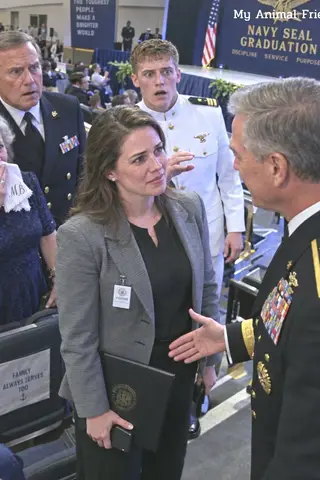
From my vantage point near the back row, squeezed against a cold concrete pillar, the celebration felt distant, almost surreal. I wore a conservative gray blazer, a simple black silk top, and sensible heels. Clipped proudly to my lapel was a visitor badge—a small, laminated rectangle that my father had insisted I wear so I would "look the part of a spectator rather than an embarrassment."
My father, retired Navy Captain Robert Hayes, sat three rows ahead of me. Throughout the morning ceremony, he had worked the crowd like a seasoned politician. He shook hands with retired flag officers, patted active-duty commanders on the back, and pointed eagerly toward the stage whenever Daniel walked across it. To hear my father tell it, Daniel’s achievement was the sole culmination of the Hayes family legacy.
"My son," he had told a group of senior officers just twenty minutes before the ceremony began, his chest puffed out with unmistakable pride.
He never said my children.
I had learned long ago not to expect a seat with the family. When Daniel’s name was announced, my mother had wept openly into a monogrammed linen handkerchief, leaning her head against my father’s shoulder. They had reserved the front-row VIP block months in advance. My invitation, delivered via a cold text message from Daniel three days prior, had arrived with a mocking caveat: Try to dress nicely. Don't want you looking like your usual jobless self.
I reached inside my blazer, my fingers brushing against the cold, matte-finish casing of a secure, encrypted satellite communicator. The device rested quietly against my ribs, silent for the moment, but pulsing with a low, latent power. Ten minutes earlier, while the auditorium was shaking with applause for the graduating class, the phone had vibrated once against my chest.
EXTRACTION CONFIRMED. ALL PERSONNEL ACCOUNTED FOR.
No names. No locations. No operational parameters. Just a secure burst transmission routed through a military satellite constellation that my father didn’t even know existed. Men and women whose faces would never appear on a news broadcast were alive tonight because of tactical decisions made in a windowless underground command center in Northern Virginia—decisions that had crossed my desk before sunrise.
Yet, to the man who raised me, I was still nineteen years old. I was still the girl who had walked out of the United States Naval Academy during her junior year, leaving behind a wake of scandal, disappointment, and whispered family shame.
Samantha quit the Academy.
Samantha couldn't handle the pressure.
Samantha works in some boring desk job in insurance now.
That was the narrative my father had carefully constructed and meticulously maintained across a decade of family dinners, holiday parties, and military balls. Whenever Daniel needed to look stronger, sharper, or more resilient, my father pulled out the cautionary tale of the daughter who failed. I was the foil against which my brother’s success was measured.
The applause died down as the band struck up a traditional march. The crowd began to mill about, families surging forward to embrace their sailors, taking flash photographs and weeping tears of joy. I remained pinned against the back wall, content to watch the spectacle from the shadows. I had no desire to push through the crowd. I had a flight to catch back to DC that evening, and my mind was already several steps ahead, tracking logistics and debrief briefs.
Then a familiar voice cut through the hum of conversation.
"Didn’t think you’d actually show, Sam."
I turned my head. Daniel was standing just a few feet away, flanked by two of his newly graduated teammates who looked distinctly uncomfortable. Daniel was still wearing the radiant, theatrical smile he had carried across the stage, his new trident catching the glare of the overhead lights. His eyes swept over my gray blazer with open, condescending amusement.
"Must be weird," Daniel added, his voice carrying just enough to ensure the surrounding officers could hear every word, "watching someone actually finish what they started."
One of his teammates shifted his weight, staring down at the polished linoleum floor. The other cleared his throat awkwardly, looking away toward the exit.
Daniel leaned in closer, his smirk widening. "Don't worry. Nobody expects you to understand what this means. Real operations take a different kind of mental fortitude. Not everyone is cut out for the trident."
Before I could formulate a response—though I had no intention of offering one—a shadow fell over us.
My father stepped smoothly between Daniel and me, his face fixed into the practiced, gracious smile he reserved for high-ranking acquaintances. He placed a heavy, paternal hand on Daniel’s shoulder, anchoring him firmly in the spotlight.
"Daniel," my father said, his voice rich with paternal pride, "come meet the admirals. This is your day. Don't waste it on distractions."
He turned his gaze toward me, his eyes hardening into a familiar, glacial glare. His tone dropped an octave, dripping with quiet contempt. "Samantha. Let’s not make this awkward. Just stay out of the way, find a seat in the back, and let your brother have his moment."
I almost laughed out loud. The sheer irony of his warning was staggering. I hadn't spoken a single word to my brother. My mere existence, my quiet presence in the room, was apparently enough to destabilize the fragile ecosystem of my father’s pride.
"I'm not doing anything, Captain," I replied evenly, using his formal rank with a subtle, deliberate flatness that made his jaw twitch.
Before my father could issue another reprimand, the entire atmosphere of the auditorium shifted.
The brass band stopped mid-measure. The low, buzzing roar of hundreds of conversations dropped into a sudden, eerie hush. Near the VIP section at the front of the hall, a group of senior commanders and captains suddenly straightened up, snapping to attention almost in unison. People began to step backward, clearing a wide, unobstructed pathway down the center aisle.
General Thomas Carter was walking toward us.
Four silver stars gleamed on his shoulders. His face, lined with decades of hard command and strategic brilliance, was an unreadable mask of absolute authority. He didn't walk; he strode with the unmistakable momentum of a man who commanded battalions with a flick of his wrist.
My father saw him first.
His entire posture transformed instantly. The rigid, proud captain melted into an eager, subservient subordinate. He hastily straightened Daniel’s collar, smoothed down his own tie, and shoved my brother half a step forward into the clearing aisle.
This was the photograph my father had dreamed of for years. The retired captain, the newly minted SEAL son, and a personal, face-to-face commendation from one of the most powerful generals in the United States Armed Forces.
Daniel saw it too. His eyes lit up with sudden, ecstatic validation. He squared his shoulders, puffed out his chest, and raised his right hand in anticipation of the ultimate handshake.
General Carter drew closer.
My father beamed, his chest swelling with self-importance.
Daniel prepared to speak.
And General Carter walked straight past both of them without even breaking his stride.
The End









