 Family Disowned Her For Being A "Bandage Changer"
Chapter 8
Rebuilding from the Ground Up
The transition of the military medical logistics task force into a permanent, nationwide directive didn't happen overnight, but momentum was unstoppable once the political roadblocks were cleared.
Two weeks after the congressional hearing, I found myself standing in front of an auditorium full of senior military medical officers, field surgeons, and logistics commanders at Fort Meade. The air in the room was charged with anticipation.
Major Vance stood near the side of the stage, clicking through presentation slides that outlined our new trauma triage framework—a system designed to cut field evacuation times by forty percent and equip every mobile unit with advanced stabilization gear.
When my name was announced, I stepped up to the podium. The hum of conversation in the auditorium instantly died away.
"For too long," I began, my voice echoing off the paneled walls, "military medicine has treated logistics as an afterthought—something left to bureaucrats and spreadsheet accountants who have never heard a mortar round whistle overhead. We have accepted heavy equipment, outdated supply chains, and political compromises because 'that's how things have always been done.'"
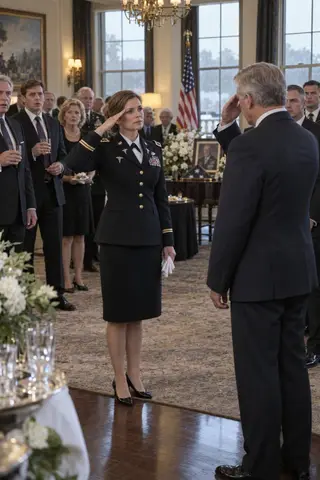
I paused, looking out across the sea of uniforms. Among the faces in the front row was Thomas Whitaker, nodding approvingly.
"No more," I said firmly. "From this day forward, every piece of gear we deploy, every vehicle we approve, and every supply line we open will be measured by one standard and one standard only: does it keep our people alive on the battlefield? If a contract fails that test, it gets thrown out. No exceptions. No political interference."
The applause that followed wasn't polite or performative. It was the sharp, thunderous, genuine validation of men and women who knew the cost of compromise firsthand.
After the presentation concluded, officers lined up to shake my hand and discuss tactical implementations for their respective units. Among them were young combat medics—men and women who had spent years fighting uphill battles against institutional red tape just to get basic supplies to their patients.
"Thank you, Colonel," a young captain from the 82nd Airborne said, her eyes bright with respect. "For years, we felt like nobody at the Pentagon even knew we existed."
"We know now," I said, shaking her hand firmly. "And we aren't going anywhere."
The End









