 Eight Months After My Son Accused His Pregnant Wife of Theft, She Warned Me About His Morning Coffee
Chapter 10
The Cup I Chose
The final confirmation arrived not in a courtroom but in a meeting room at Helen's office weeks after Rebecca's son was born. Investigators had assembled medical findings, records of access, witness accounts, and other evidence sufficient to take formal action concerning suspected tampering.
They informed me that Garrett was among the people under investigation and that charges had been brought. They did not promise a conviction, nor did they ask me to interpret the evidence for them. My first feeling was grief so large I could barely stand.
I had prayed that the tests would reveal an unrelated medical condition. I had wanted the coffee to be an innocent kindness and Rebecca's fear an awful misunderstanding. Instead the evidence had become serious enough for the legal system to act. Helen reminded me that the courts would determine responsibility through their own procedures. I nodded. I understood the difference between a charge and a verdict. Understanding it did not make the possibility of my son's betrayal hurt less.
Frank drove me home. For several miles we said nothing. Then I asked whether he thought I'd caused this by working too much after Margaret died. He kept his eyes on the road. "You made mistakes," he said. "You can admit them without making yourself responsible for every decision Garrett made afterward." I wanted a simpler answer, something that would either condemn me or absolve me. Frank refused to give me one. That was what friendship sounded like when it stopped trying to be comfortable.
Rebecca received the formal correction clearing her of the unsupported theft allegation from every company channel in which it had been circulated. It did not restore the job she'd lost or the months she'd spent afraid. At her request, Helen coordinated with Leah so she could pursue any further remedies independently. I offered a written apology. She asked me not to publish it on the company website or use it as a speech. I sent it to her privately, addressed to Rebecca rather than to an audience.
In the letter I told her I had believed a convenient story because it came from my son. I acknowledged the calls she made that I had failed to return, the money she'd lost access to, and the fear she carried while pregnant. I did not ask her to call me Dad or promise she would forget. I wrote that the correction and assistance were responsibilities, not gifts she owed me thanks for. It was the longest letter I'd written in years, and the first I did not end by asking for anything.
Her response arrived a week later. She said she was not ready to talk about forgiveness. She appreciated that I had stopped describing her safety as a family favor. She also said her son had a name: Oliver. I read the name aloud to Frank, then cried at his kitchen table. Oliver was not named for me or for Garrett. He was named for Rebecca's grandfather, who had once made her pancakes on mornings when she was afraid to go to school. I thought that was a good reason for a name.
Several weeks later Rebecca invited me to visit Oliver for half an hour at Nora's home. Leah had helped arrange boundaries, and I followed them without complaint. Nora opened the door and led me into a sunny sitting room where Rebecca sat holding a small sleeping bundle. I felt suddenly enormous and awkward. The child was quiet, his face turned toward his mother's shoulder. Rebecca asked whether I'd like to sit. I lowered myself into a chair and waited until she offered him to me.
Oliver's weight settled into my arms with a trust he had not yet learned to question. His fingers curled around one of mine, and I had to look away. Rebecca watched closely but did not appear frightened.
She told me he had begun sleeping a little longer between feedings, though she was still exhausted. I asked whether Nora was managing to rest too. Rebecca smiled. "We take turns," she said. The sentence described a home I had spent years insisting could exist only under one roof with my name on it.
The specialist continued following my recovery. My tremor had eased but had not disappeared, and I still had days when fatigue shortened my afternoon. I no longer tried to explain every symptom with the same fear. I followed the treatment plan, kept appointments, and asked questions when I didn't understand. Some days I was angry that my body had become a place where trust failed me. Other days I was grateful it had survived long enough to change my mind.
Garrett wrote from the place where he was being held pending further proceedings. He asked whether I would visit. The letter contained no apology to Rebecca and no acknowledgment of the medical evidence, only memories of our years together and a plea that I not abandon him. I sat with it for several days. Then I replied through the appropriate channel that I would consider a visit with legal guidance, that I loved him, and that love would not change the need for the truth to be addressed.
I did not know whether he would ever accept responsibility. I did know I could no longer make my grandson's future depend on that decision. With independent advice, I updated my personal plans so my health and property could be managed without concentrating unchecked power in one family member. Any provision for Oliver was structured to protect his interests without giving me control over Rebecca. I signed the documents slowly, reading every page aloud when I needed to.
One afternoon I returned to my own house for the first time without Frank beside me. The rooms smelled faintly of furniture polish, and the hallway photographs were still in place.
I moved Rebecca's wedding picture back to the shelf where it belonged, not to pretend the marriage could be restored, but because her presence had been real. I hung a small photograph of Oliver nearby after asking her permission. It showed his hand against the blanket Nora had knitted, nothing that revealed where he lived.
In the kitchen I found the coffee cups Garrett used to carry into my office. I had once treasured them because they represented a son thinking of his father. Now they were simply cups. I washed one and put it away. I did not smash it or display it like evidence. The evidence was in professional hands, and the harm would not vanish because I broke a piece of ceramic. I made tea in a cup I chose myself and carried it to the garden.
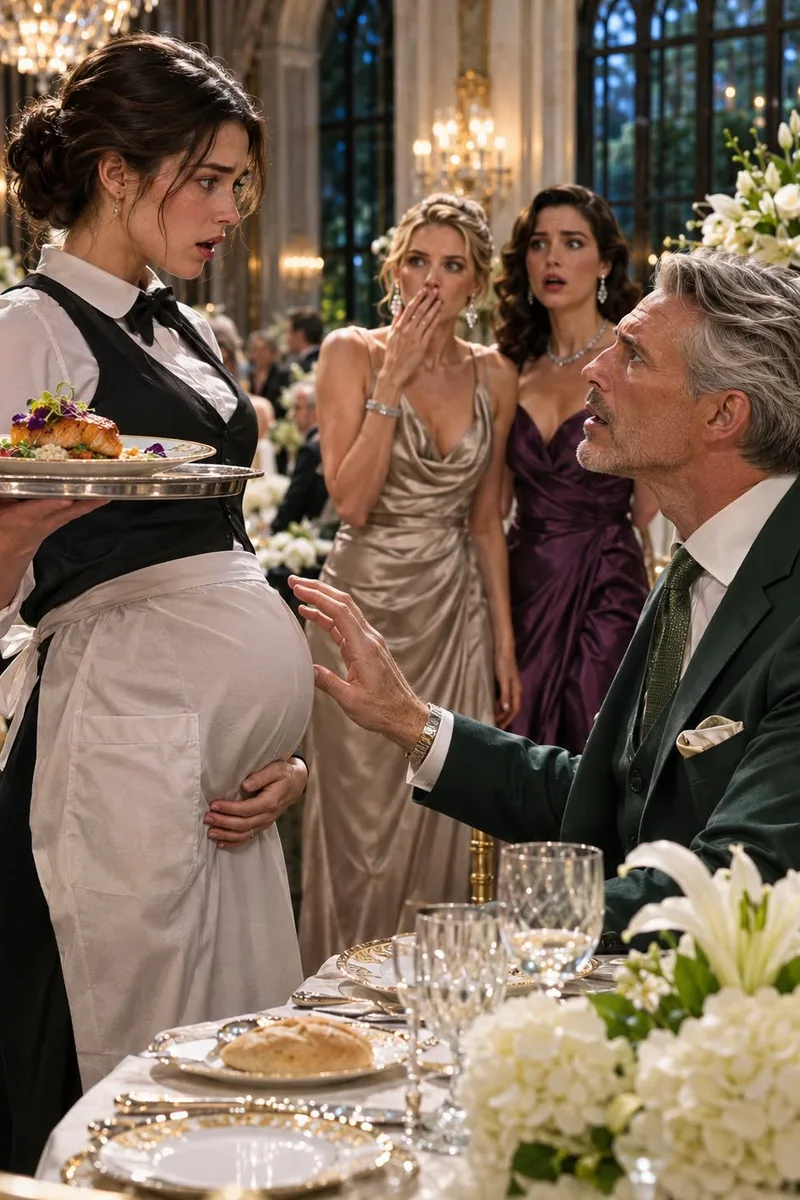
I thought of the night at the restaurant when Rebecca caught my shaking hand and asked about my morning coffee. The warning had frightened me, but the greater shock was realizing how easily I had allowed my own certainty to silence someone weaker than me. I could not recover the eight months she'd spent alone or make Garrett into the man I had hoped he'd become. I could choose what happened the next time someone asked me to listen.
The garden lights came on as the sun disappeared. I set down my cup, took out my phone, and sent Rebecca a brief message asking whether Oliver had enjoyed the book I'd dropped off through Nora. There was no demand for a photograph or an immediate reply. I watched the sky darken and felt my hands rest quietly on my knees. When a message came later, it said only, He likes the pictures. Thank you. I smiled, and left the phone where it was.
The End









