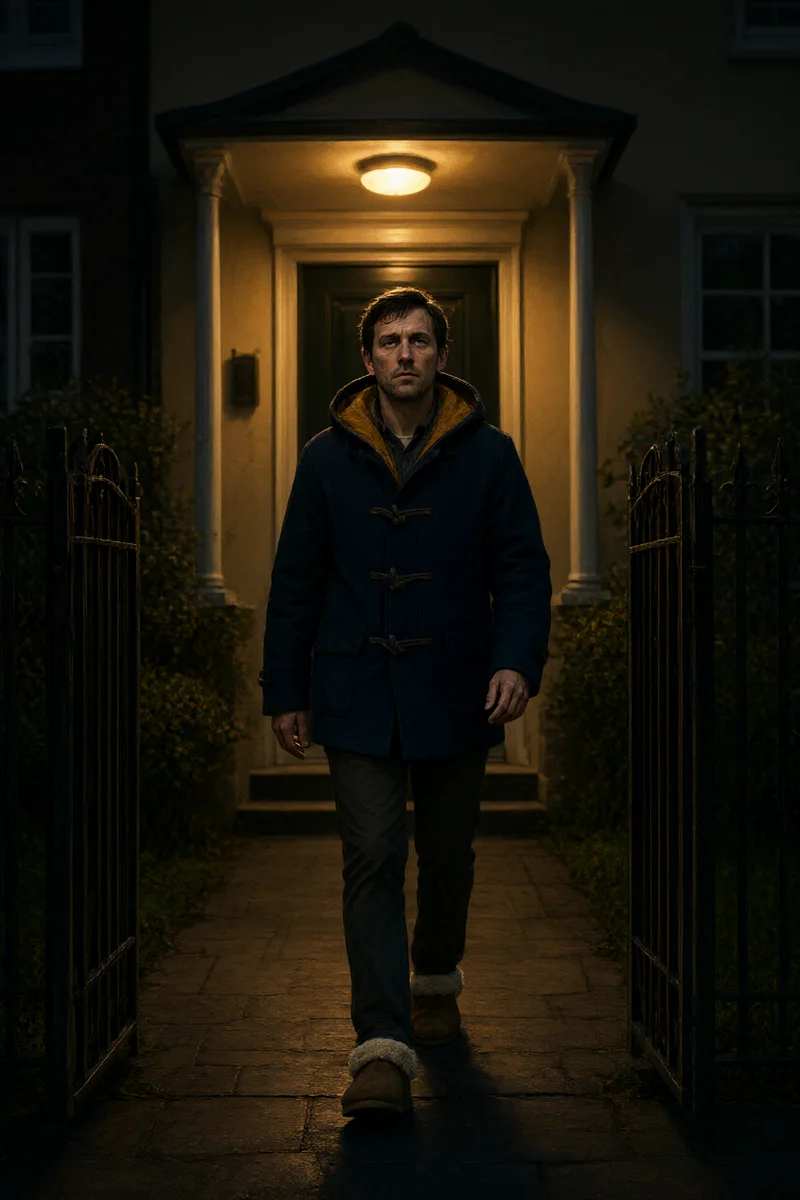
 The 3:07 Clip
Chapter 2
Complex Sleep Behaviors
The pill came in a white box with a folded leaflet inside it, the kind of leaflet nobody reads. Rasmus unfolded it on the kitchen table and read every word, with the rosemary sitting beside it on a saucer like evidence.
He had been taking it for three weeks. His doctor had prescribed it after he admitted, at the end of an appointment about something else, that since the divorce he had not slept more than four hours in a row.
Section 4. Possible side effects. Rare but serious.
Complex sleep behaviors, including sleepwalking, sleep-driving, preparing and eating food, making phone calls, or engaging in other activities while not fully awake, with no memory of the event.
He read it three times. Then he phoned his ex-wife, which he had not done in five months.
Liv answered on the fourth ring, wary. He didn't waste time. “When we were first married. You told me once I'd been walking around the apartment in the night. Was that real?”
A pause. “Twice. Once you rearranged all the shoes by the door. Once you went out to the landing and tried to get into the Bergstroms' apartment with your key. I steered you back. You didn't remember either time.” Another pause. “Rasmus, what's happened?”
He told her. She was quiet for a while. “Your mother said you did it as a boy, too. Went looking for things. She used to find you in the kitchen at three in the morning, wide awake, with your eyes open, making toast.”
He thanked her and hung up before he could hear her feel sorry for him.
He walked the route. In daylight, in his ordinary shoes, from his front door across Wexford Close, down the Haverkamps' side path past the rosemary to their back door. It was thirty-one steps. The Haverkamp house was the same model as his, built by the same developer in the same year, only mirrored, the kitchen on the left instead of the right.
A man walking in his sleep, looking for his kitchen, could have walked into theirs.
If the back door was open. That was the part he couldn't make work. He had never had a key to number 11. He had been inside once, in July, for a glass of wine he hadn't wanted, and had stood in that kitchen making conversation about school catchment areas.
At noon Graham Haverkamp knocked on his door. He was a big man in a fleece, red in the face, holding his phone the way some people hold a summons.
“I'm going to say this once,” Graham said. “That ring was my wife's mother's. It's the only thing of hers Sheila has. Whoever was in my kitchen last night went through the drawers and left my back door standing wide open with my daughter asleep upstairs. And everybody on this street thinks it was you.”
Rasmus opened his mouth to tell him. All of it, the pill and the leaflet and the rosemary.
“The detective's coming at five,” Graham said before he could. “I'll be with her. You can explain your coat to both of us.” He turned and went back across the road without waiting for an answer.
Rasmus shut the door and stood in the hall. Then he did what he should have done at nine o'clock that morning. He took the duffel coat off its hook and went through its pockets.
Left pocket: a bus pass, a chewed pen, a supermarket receipt.
Right pocket: something small and square and soft, that he did not recognize by touch.
He drew it out. A jeweler's box, covered in faded blue velvet, the size of a walnut. He opened it with his thumb.
The slot in the white satin where a ring should sit was empty.
The End









