 "Dinner's Canceled," He Lied While Feasting on My Dime. When I Dropped the Envelope on Their Table, Their Secret Luxury Life Instantly Collapsed!
Chapter 1
The Phantom Cancellation
The glowing amber numbers on my kitchen microwave read 6:18 PM, but the silence in my house felt like it belonged to midnight. Just minutes earlier, the sharp buzz of my phone had broken the quiet. It was Wesley, my son, speaking with that polished, corporate cadence he had perfected ever since he moved into management at the regional tech firm.
"Mom, dinner’s canceled," he had said, his tone brisk and efficient, as if he were checking an item off a busy to-do list. "Cora isn't feeling well. We’ll reschedule."
"Of course," I told him, smoothing down the front of my cardigan. It’s what mothers do when they spend decades softening the edges of disappointment, convincing themselves that giving space is a form of grace.
When the call ended, I stood alone in the kitchen of my Blue Springs home. The house was orderly, perhaps too orderly. The cul-de-sac outside was quiet, blanketed in the quiet predictability of a neighborhood where everyone knew everyone else's routines, yet somehow remained entirely isolated. My kitchen counters were wiped clean, the dishwasher hummed a low, steady baseline, and the air smelled faintly of lemon cleaner and old paper.
Then, the second notification hit my phone screen. It wasn’t a text from Wesley checking in, nor was it Cora apologizing for ruining our evening. It was a digital push notification from my credit card issuer.
Pending charge: Willow Creek Restaurant. $384.50.
I stared at the glowing pixels. Willow Creek wasn't a local diner where you grabbed a quick burger or a plate of fries. It was the premier dining destination in the county—a place defined by crisp linen tablecloths, low warm lighting, and servers who recited the nightly specials with theatrical reverence. It was where people celebrated milestone anniversaries, corporate promotions, or engagements. It was a place you planned for weeks in advance, not somewhere you stumbled into because you couldn't find anything else in the pantry.
And yet, my primary credit card—the one linked to my checking account, the one Wesley had access to for "emergencies and family logistics"—was actively funding a meal I had just been told didn't exist.
A strange, cold clarity washed over me. There was no hot surge of blinding rage, no sudden impulse to throw things against the wall. Instead, a heavy, unyielding stillness settled into my chest. For years, I had excused their subtle exclusions, their condescending sighs when I didn't understand modern technology fast enough, and the way they treated my home like a pit stop while living their separate, superior lives. They viewed me as a utility—a convenient safety net, a free babysitter, a financial cushion, and an embarrassing relic of the past to be managed from a distance.
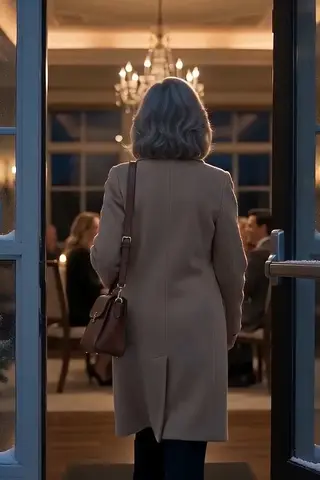
I walked over to the hallway closet, pulled out my heavy wool coat, and slipped my keys into my purse. My fingers brushed against a plain manila envelope tucked inside the side pocket—an ordinary document I had printed out earlier that morning, thinking I might need it for a completely different reason. As it turned out, destiny had other plans.
Without a word to an empty house, I locked the front door behind me, stepped out into the crisp evening air, and turned the ignition of my sedan. It was time to see what sickness looked like up close.
The End









